
Introduction
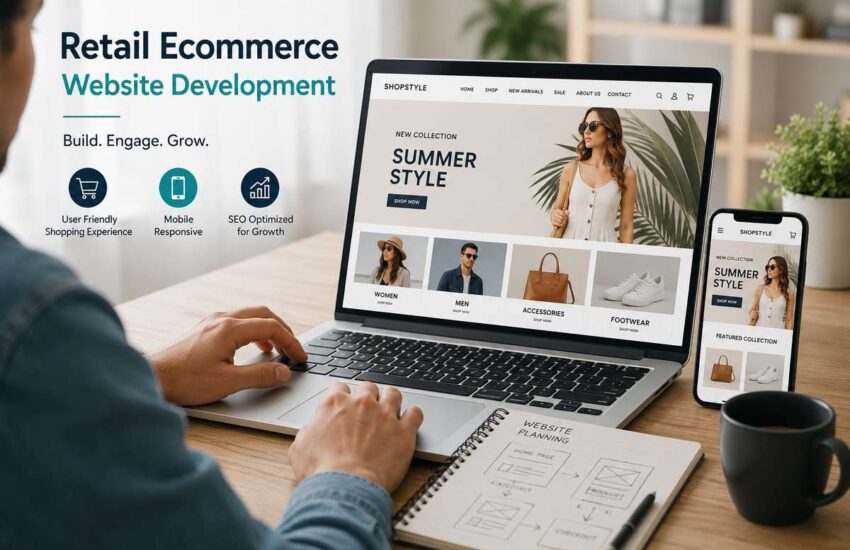
A specialized ecommerce website is much more than an online store. Many businesses believe that building an ecommerce website is simply a matter of choosing Shopify, installing a theme, uploading products, and waiting for sales to arrive. While this approach may work for some businesses, retailers operate in a completely different environment.
Retail businesses manage inventory, suppliers, physical stores, customer loyalty programs, seasonal promotions, product variants, and increasingly, multiple sales channels. Their ecommerce website is not just another sales channel – it becomes an extension of the retail business itself.
Unfortunately, many retailers discover this only after launching a beautiful website that cannot keep inventory synchronized, requires constant manual updates, or struggles to support future business growth.
At Retail Matchmaker, we believe retailers deserve more than a standard ecommerce website. They need a retail-focused ecommerce solution that supports daily operations, improves customer experience, and grows alongside their business.
In this guide, we’ll explain why retail ecommerce is different, how platforms like Shopify, WooCommerce, and Magento fit into the picture, and what retailers should consider before investing in a new ecommerce website.
Retail Ecommerce Is Different From Traditional Ecommerce
A restaurant selling gift cards, a consultant selling online courses, and a retailer selling thousands of products all use ecommerce websites – but their operational requirements are completely different.
Retailers deal with challenges that most website developers never consider.
These include:
- Thousands of SKUs
- Product variants (size, color, style)
- Multi-location inventory
- Point-of-sale systems
- Supplier purchasing
- Inventory replenishment
- Returns and exchanges
- Omnichannel selling
- Seasonal pricing
- Customer loyalty programs
An ecommerce website built without considering these requirements may look attractive but often creates operational inefficiencies behind the scenes.
A successful retail ecommerce website should support both your customers and your internal business operations.
In Short
Retail ecommerce is about much more than selling products online. Your website should help inventory, customers, orders, and retail operations work together as one connected business.
Why a Specialized Ecommerce Website Outperforms Generic Websites
Many web development agencies are excellent at designing attractive websites. However, retailers require more than visual appeal.
A retail ecommerce website should be designed around operational workflows.
Common problems retailers experience include:
- Inventory discrepancies between online and physical stores
- Manual order entry
- Duplicate product management
- SKU mismatches
- Delayed inventory updates
- Customer dissatisfaction caused by overselling
- Difficulty expanding into new sales channels
These challenges are rarely caused by the ecommerce platform itself. Instead, they result from websites that were designed without understanding retail operations.
Retailers should choose a development partner who understands inventory management, retail workflows, POS systems, and future business growth – not just website design.
Choosing The Right Ecommerce Platform
One of the most common questions retailers ask is:
Which ecommerce platform should I choose?
The answer depends entirely on your business requirements.
Shopify
Shopify is an excellent choice for many retailers because it offers:
- Fast deployment
- Secure hosting
- Excellent performance
- Large app ecosystem
- Easy administration
- Strong scalability
For retailers seeking simplicity and long-term reliability, Shopify is often the preferred option.
WooCommerce
WooCommerce provides greater flexibility and customization for businesses already using WordPress.
It works well for retailers who want complete control over their website and have access to ongoing technical support.
WooCommerce is particularly suitable for businesses with unique design requirements or extensive content marketing strategies.
Magento
Magento is designed for larger retailers with complex product catalogs, advanced workflows, and enterprise-level requirements.
Although it offers exceptional flexibility, it generally requires greater technical expertise and higher ongoing maintenance than Shopify or WooCommerce.
There is no universal “best” ecommerce platform.
The right platform depends on your products, operations, future integrations, budget, and long-term growth strategy.
Why Future POS Integration Matters
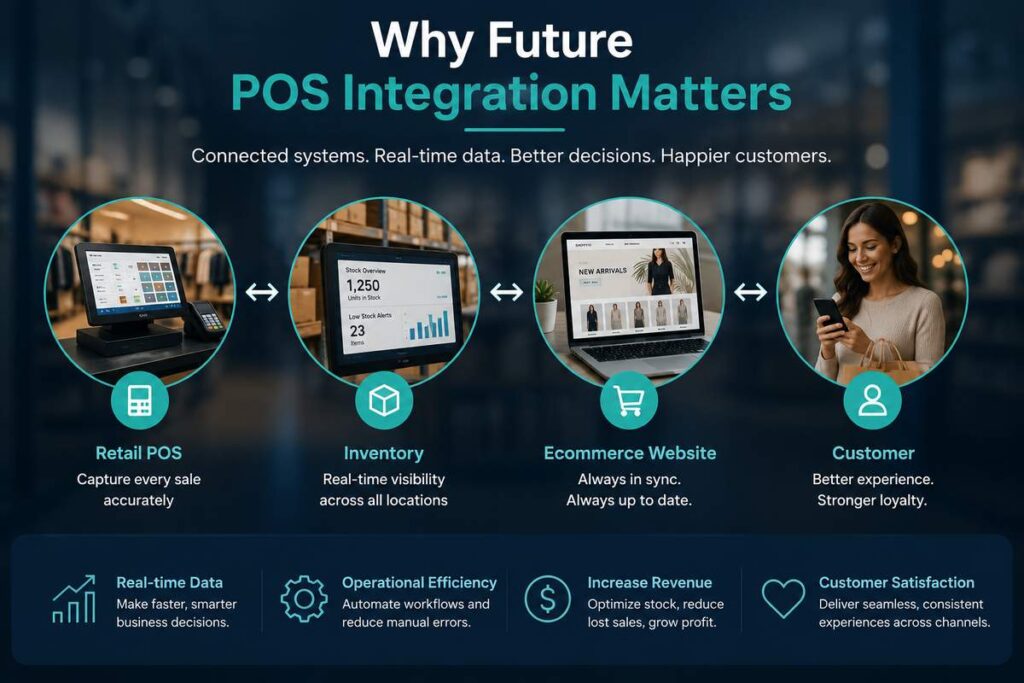
Many retailers initially focus on launching an ecommerce website quickly and postpone thinking about POS integration until later. While this approach may seem practical, it often results in expensive redevelopment as the business grows.
A retail POS system manages critical business functions such as inventory, pricing, customer profiles, sales transactions, and in-store operations. If your ecommerce website is built without considering future POS integration, your staff may eventually find themselves updating products, inventory, and pricing separately across multiple systems.
This duplication increases operational costs and creates opportunities for errors.
Planning for future POS integration from the beginning allows your ecommerce website to grow alongside your retail business rather than becoming a limitation.
Whether you use Lightspeed Retail, Square POS, Clover, or another retail system in the future, a well-designed ecommerce website should be capable of supporting inventory synchronization, centralized product management, and efficient order processing without requiring a complete rebuild.
At Retail Matchmaker, we always recommend designing ecommerce websites with future integrations in mind. Even if your Lightspeed Shopify integration is not required today, planning for it now can save significant time, money, and operational disruption later.
Inventory Synchronization Is the Foundation of Retail Ecommerce
One of the biggest challenges retailers face is maintaining accurate inventory across online and physical stores.
Customers expect products displayed online to be available for purchase. Nothing damages customer confidence faster than ordering an item only to receive a cancellation because the inventory was incorrect.
Inventory synchronization helps retailers:
- Maintain accurate stock levels
- Reduce overselling
- Prevent duplicate inventory updates
- Improve order accuracy
- Deliver a better customer experience
- Save valuable staff time
As your business grows, manual inventory management quickly becomes unsustainable.
Retailers who invest in scalable ecommerce solutions position themselves for long-term operational efficiency and future automation.
This is one of the primary reasons why specialized retail ecommerce websites outperform generic ecommerce implementations.
In Short
Inventory accuracy is no longer just an operational requirement – it has become a customer experience requirement. Retailers who maintain synchronized inventory build greater trust and reduce costly operational mistakes.
Omnichannel Retail Is No Longer Optional
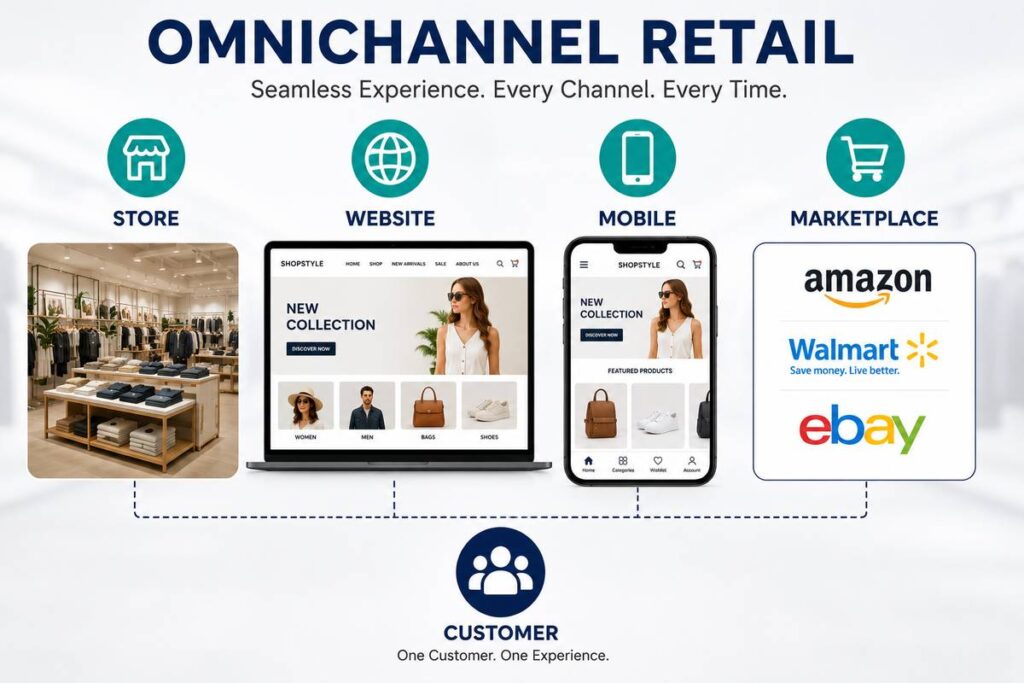
Today’s customers move effortlessly between physical stores, ecommerce websites, social media, and online marketplaces.
They may:
- Research products online
- Visit a physical store
- Purchase through the ecommerce website
- Return products in-store
- Purchase again using a mobile device
Customers expect every interaction to feel connected.
Retailers therefore require technology that supports a consistent shopping experience across every sales channel.
A specialized ecommerce website becomes the central component of an omnichannel retail strategy by supporting:
- Consistent product information
- Accurate inventory visibility
- Unified customer experience
- Faster order fulfillment
- Improved operational efficiency
Rather than treating ecommerce as a separate business, successful retailers integrate it into their overall retail strategy.
Customer Experience Extends Beyond Website Design
Many businesses assume customer experience depends only on attractive design.
In reality, customer experience includes every interaction customers have with your business before, during, and after making a purchase.
Retail ecommerce websites should provide:
- Fast page loading
- Mobile-friendly navigation
- Secure checkout
- Clear product information
- Accurate inventory availability
- Reliable shipping updates
- Easy returns
- Consistent pricing
Customers rarely remember the technology behind an ecommerce website.
They remember whether purchasing was simple, accurate, and reliable.
That is why successful ecommerce projects balance visual design with operational performance.
Build for Growth, Not Just for Launch
Launching an ecommerce website is only the beginning.
As retailers grow, they often introduce:
- Additional product categories
- Multiple store locations
- Customer loyalty programs
- Marketplace selling
- International shipping
- POS integration
- Inventory automation
- Business intelligence reporting
An ecommerce website should support these future requirements without requiring a complete redevelopment every few years.
Planning for scalability from the beginning reduces future costs and allows retailers to expand with confidence.
Retailers should evaluate website development partners based not only on what they can build today, but also on how well their solutions support tomorrow’s business requirements.
Why Retail Matchmaker Focuses on Retail Ecommerce
Retail Matchmaker was created specifically to help retailers succeed in an increasingly connected retail environment.
Unlike general web development agencies, we understand that successful ecommerce depends on much more than attractive design.
Our ecommerce website development approach considers:
- Retail operations
- Inventory management
- Customer experience
- Future POS integration
- Omnichannel retail
- Scalability
- Long-term business growth
Whether you need a new Shopify website, a WooCommerce store, or guidance selecting the right ecommerce platform, our objective is the same – to build an ecommerce solution that supports your retail business today while preparing it for tomorrow’s opportunities.
If your long-term strategy includes integrating your ecommerce website with a retail POS system, our team can also help you prepare for that journey without unnecessary redevelopment or operational disruption.
In Short
A successful retail ecommerce website is not defined by the platform you choose – it’s defined by how well that platform supports your retail operations, customer experience, and future growth. Retailers who invest in scalable, integration-ready ecommerce solutions are better positioned to adapt to changing customer expectations and expand their business with confidence.
Key Takeaway
The best ecommerce websites are built around retail operations – not just attractive designs. Before selecting a platform or hiring a developer, ensure your website is designed to support inventory management, omnichannel retailing, future POS integrations, and long-term business growth. A strategic investment today can eliminate costly redevelopment and operational challenges tomorrow.
Frequently Asked Questions
Retailers manage inventory, product variants, suppliers, physical stores, and customer data that require more advanced functionality than a generic ecommerce website. A specialized retail ecommerce website supports these operational requirements while improving customer experience and business efficiency.
Shopify is an excellent platform for many retailers because it offers reliability, scalability, security, and a large app ecosystem. However, the right platform depends on your business requirements, future integrations, product catalog, and long-term growth plans.
There is no universal answer. Shopify suits many growing retailers, WooCommerce offers flexibility for WordPress users, and Magento is ideal for larger businesses with complex operational requirements. The best platform depends on your business goals rather than popularity alone.
Planning for POS integration during website development reduces future redevelopment costs and makes it easier to synchronize inventory, orders, customers, and product information as your retail business grows.
Omnichannel retail connects physical stores, ecommerce websites, marketplaces, and other sales channels to provide customers with a consistent shopping experience regardless of where they interact with your business.
Inventory synchronization keeps stock levels accurate across online and physical stores, reducing overselling, improving order accuracy, and minimizing manual inventory updates.
A retail ecommerce website should support mobile-friendly shopping, inventory management, secure checkout, SEO, scalable architecture, future POS integration, customer accounts, promotions, and reporting capabilities.
Yes. Retail Matchmaker develops cost-effective ecommerce websites for retailers using platforms such as Shopify, WooCommerce, and Magento, while planning for future scalability and POS integration.
Yes. However, planning for future integration during website development usually reduces implementation complexity and avoids unnecessary redevelopment costs.
Choose a partner who understands retail operations – not just website design. Experience with inventory management, ecommerce platforms, customer experience, scalability, and retail POS integration is essential for long-term success.
Conclusion
Investing in a specialized ecommerce website is one of the most important technology decisions a retailer can make. While selecting the right platform is important, long-term success depends on much more than software alone.
Retailers need ecommerce websites that support inventory management, customer experience, operational efficiency, and future business growth. By choosing a retail-focused development partner and planning for future scalability from the beginning, businesses can avoid costly redevelopment while creating a stronger foundation for omnichannel retail.
Whether you’re launching your first online store or modernizing an existing ecommerce business, investing in a specialized ecommerce website helps ensure your technology continues supporting your business for years to come.
Ready to Build an Ecommerce Website That Grows With Your Retail Business?
Whether you’re planning a new Shopify website, evaluating WooCommerce or Magento, or preparing for future POS integration, Retail Matchmaker can help.
Our team specializes in cost-effective ecommerce website development for independent retailers and multi-location businesses across the USA and Canada.
Schedule a free consultation today and discover how the right ecommerce strategy can support your retail business now and in the future.

