
Ecommerce Website Development Cost | Complete Retailer’s Guide
Understanding ecommerce website development cost is one of the first steps when planning a successful online retail business. While many businesses search for a single price, the reality is that ecommerce website costs vary significantly depending on business requirements, platform selection, design complexity, integrations, and long-term growth objectives.
For retailers, an ecommerce website is much more than an online storefront. It becomes the central hub for product management, customer engagement, inventory synchronization, online payments, order fulfillment, and future omnichannel retail operations.
Before comparing prices, it’s important to understand what you’re actually investing in. A professionally developed ecommerce website is designed to generate revenue, improve operational efficiency, and provide a better customer experience – not simply display products online.
Before planning your budget, we recommend reading Why Retailers Need a Specialized Ecommerce Website to understand the retail-specific requirements that influence website architecture, scalability, and long-term development costs.
If you’re planning a new online store, our Ecommerce Website Development services help retailers build scalable ecommerce websites that support long-term business growth and future technology integrations.
Why Does Ecommerce Website Development Cost Vary So Much?
One retailer may launch an ecommerce website for a relatively modest investment, while another may require a significantly larger budget for what appears to be a similar project.
The difference usually comes down to business requirements rather than the platform itself.
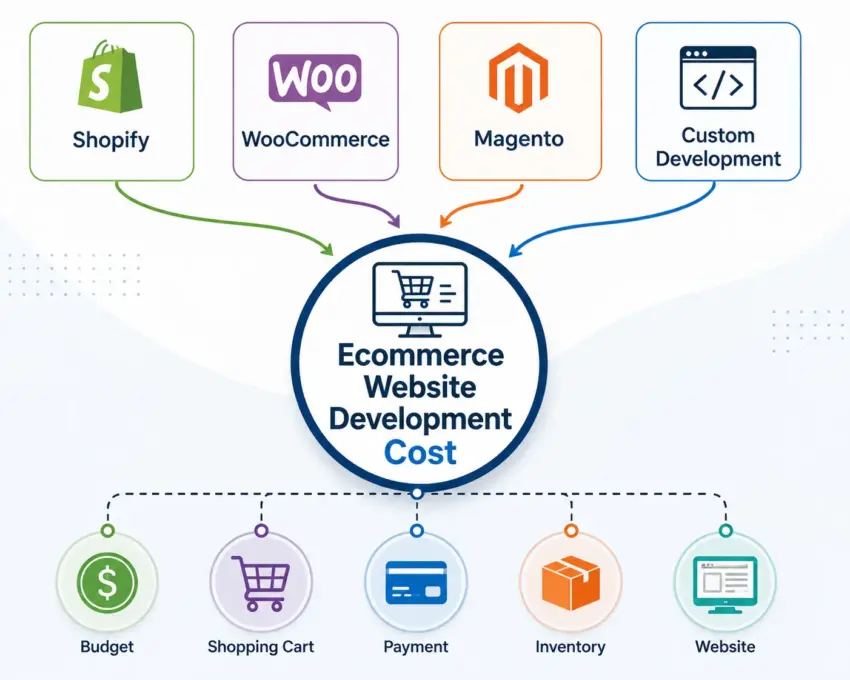
Several factors influence ecommerce website development cost, including:
- Number of products
- Website design requirements
- Platform selection
- Custom functionality
- Third-party integrations
- Payment gateways
- Shipping configuration
- Inventory management
- POS integration
- Multi-location support
- Customer account features
- SEO optimization
- Security requirements
- Ongoing maintenance
Retailers who focus only on the initial development cost often underestimate the long-term value of choosing the right solution from the beginning.
What Is Included in Ecommerce Website Development?
Many retailers assume website development simply involves designing pages and uploading products.
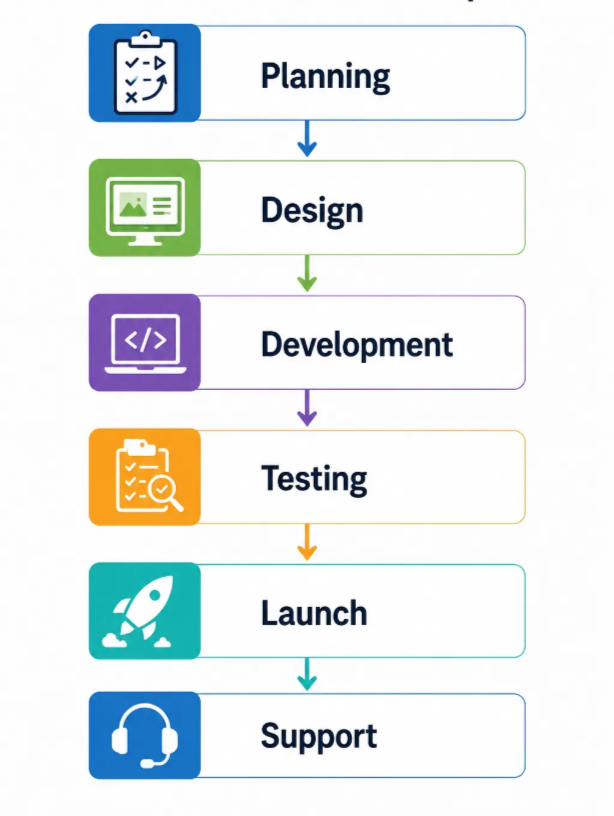
In reality, professional ecommerce website development includes multiple technical and business components working together.
Typical deliverables include:
- Website planning
- User experience (UX) design
- Responsive website development
- Product catalog setup
- Category architecture
- Navigation design
- Shopping cart configuration
- Secure checkout
- Payment gateway integration
- Shipping configuration
- Tax configuration
- Customer account functionality
- Search engine optimization
- Website speed optimization
- Security configuration
- Analytics setup
- Testing before launch
Retailers planning future growth should also consider inventory synchronization and POS compatibility during the development stage rather than treating them as future add-ons.
Retailers considering different ecommerce platforms may also benefit from reading our comparison of Shopify vs WooCommerce for Retailers, which explains how platform selection influences development costs and long-term maintenance requirements.
Major Factors That Influence Ecommerce Website Development Cost
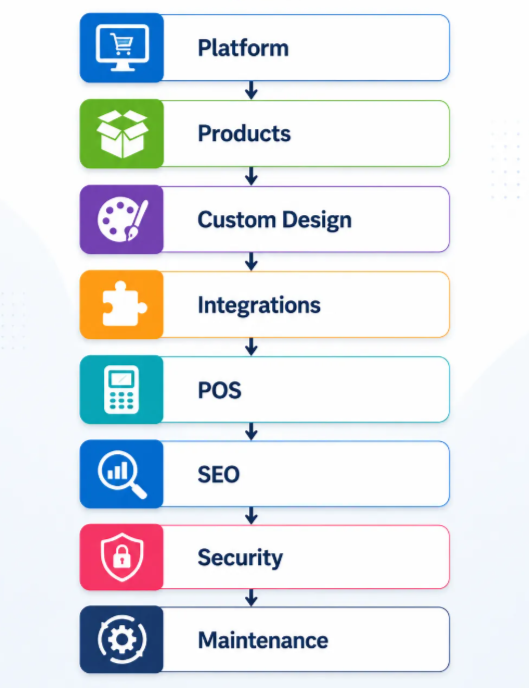
Every ecommerce project is unique, but the following factors have the greatest impact on project cost.
1. Ecommerce Platform
The platform you choose has a direct influence on development effort, licensing costs, maintenance, and future scalability.
For example:
- Shopify provides a managed environment with predictable monthly costs.
- WooCommerce offers greater flexibility but may require additional technical management.
- Magento is designed for businesses with more complex requirements and generally involves higher implementation costs.
The best platform is not necessarily the least expensive – it is the one that best supports your business over the coming years.
2. Number of Products
A retailer selling 50 products has very different requirements from one managing 25,000 products.
Large catalogs often require:
- Bulk product imports
- Advanced filtering
- Product variants
- Inventory rules
- Category optimization
- Search optimization
As product complexity increases, so does the overall development effort.
3. Custom Design
Many businesses begin with a standard website theme.
Others require:
- Fully customized layouts
- Unique product pages
- Brand-specific user experience
- Interactive landing pages
- Advanced merchandising sections
Custom design improves brand identity and customer experience but generally increases project complexity.
4. Third-Party Integrations
Modern ecommerce websites rarely operate in isolation.
Retailers frequently integrate with:
- Payment gateways
- Shipping providers
- Email marketing platforms
- CRM systems
- Accounting software
- ERP platforms
- Marketplace channels
- Inventory management software
Each integration introduces additional planning, testing, and development effort.
5. Retail POS Integration
Retailers operating both physical stores and ecommerce websites should think beyond launch day.
Planning for future Lightspeed Shopify Integration or other POS connectivity during website development helps reduce future redevelopment costs and creates a stronger foundation for omnichannel retail.
Rather than treating POS integration as a separate project, it should be considered during the initial website planning phase whenever possible.
Cost Drivers at a Glance
| Cost Factor | Impact on Development Cost |
|---|---|
| Platform Selection | High |
| Number of Products | High |
| Custom Design | High |
| Third-Party Integrations | High |
| POS Integration Planning | Medium–High |
| SEO Implementation | Medium |
| Product Content Creation | Medium |
| Security & Performance Optimization | Medium |
| Ongoing Maintenance | Medium |
In Short
There is no universal price for an ecommerce website because every retail business has different operational requirements. Understanding what drives ecommerce website development cost allows retailers to plan realistic budgets and invest in features that support long-term growth rather than focusing only on the lowest initial price.
Shopify Website Development Cost
Shopify is one of the most popular ecommerce platforms for retailers because it combines ease of use with reliable performance. However, the overall ecommerce website development cost depends on much more than Shopify’s monthly subscription.
A typical Shopify project may include:
- Theme selection or custom design
- Product catalog setup
- Collection and navigation creation
- Payment gateway configuration
- Shipping setup
- Tax configuration
- SEO optimization
- Third-party app integration
- Website testing
- Staff training
Retailers with straightforward requirements generally have lower implementation costs, while businesses requiring advanced customization or future integrations should budget accordingly.
WooCommerce Website Development Cost
WooCommerce provides exceptional flexibility because it is built on WordPress.
Although WooCommerce itself is free, retailers should consider additional project costs such as:
- Website hosting
- Premium themes
- Premium plugins
- Security configuration
- Performance optimization
- Website backups
- Ongoing maintenance
For retailers already using WordPress, WooCommerce can be a cost-effective solution. However, businesses without technical resources should also factor in long-term maintenance and support.
Magento Website Development Cost
Magento (Adobe Commerce) is designed for businesses with complex ecommerce requirements.
It is often selected by retailers needing:
- Large product catalogs
- Advanced pricing rules
- Multi-store management
- International ecommerce
- Highly customized workflows
- Enterprise-level integrations
Magento projects typically require greater development effort, making them better suited for medium to large retailers with more sophisticated operational requirements.
The higher investment often reflects greater flexibility rather than simply a more expensive platform.
Comparing Platform Costs
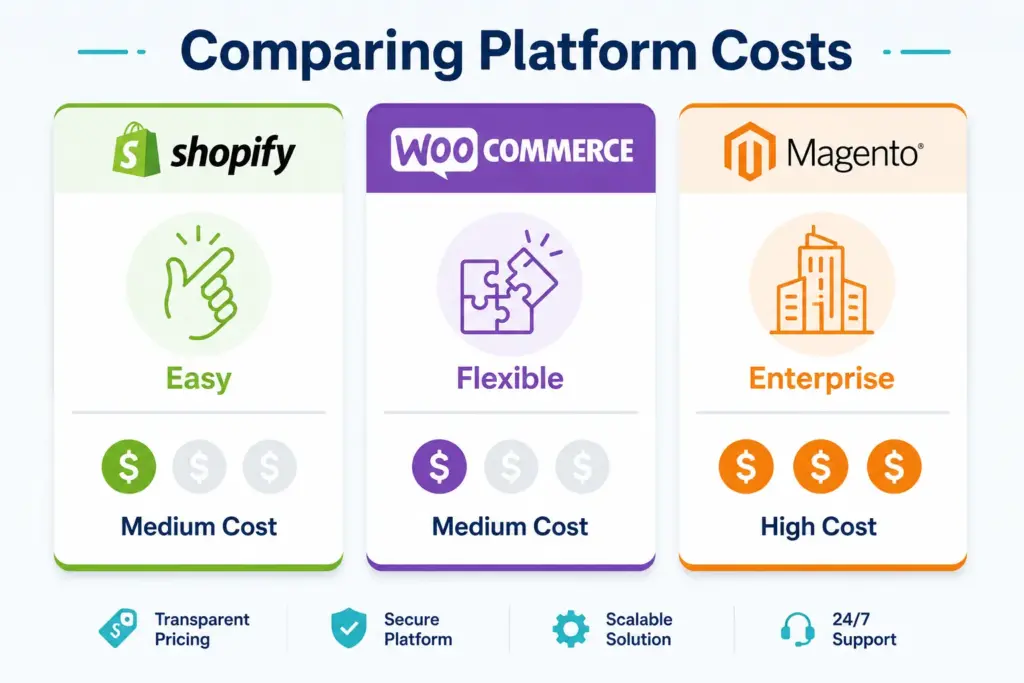
| Platform | Initial Investment | Ongoing Maintenance | Best For |
|---|---|---|---|
| Shopify | Moderate | Low | Independent retailers and growing businesses |
| WooCommerce | Moderate | Medium | Retailers wanting flexibility and WordPress integration |
| Magento | High | High | Large retailers with complex business requirements |
Rather than asking which platform is cheapest, retailers should evaluate which platform delivers the greatest long-term value.
Hidden Costs Retailers Often Overlook
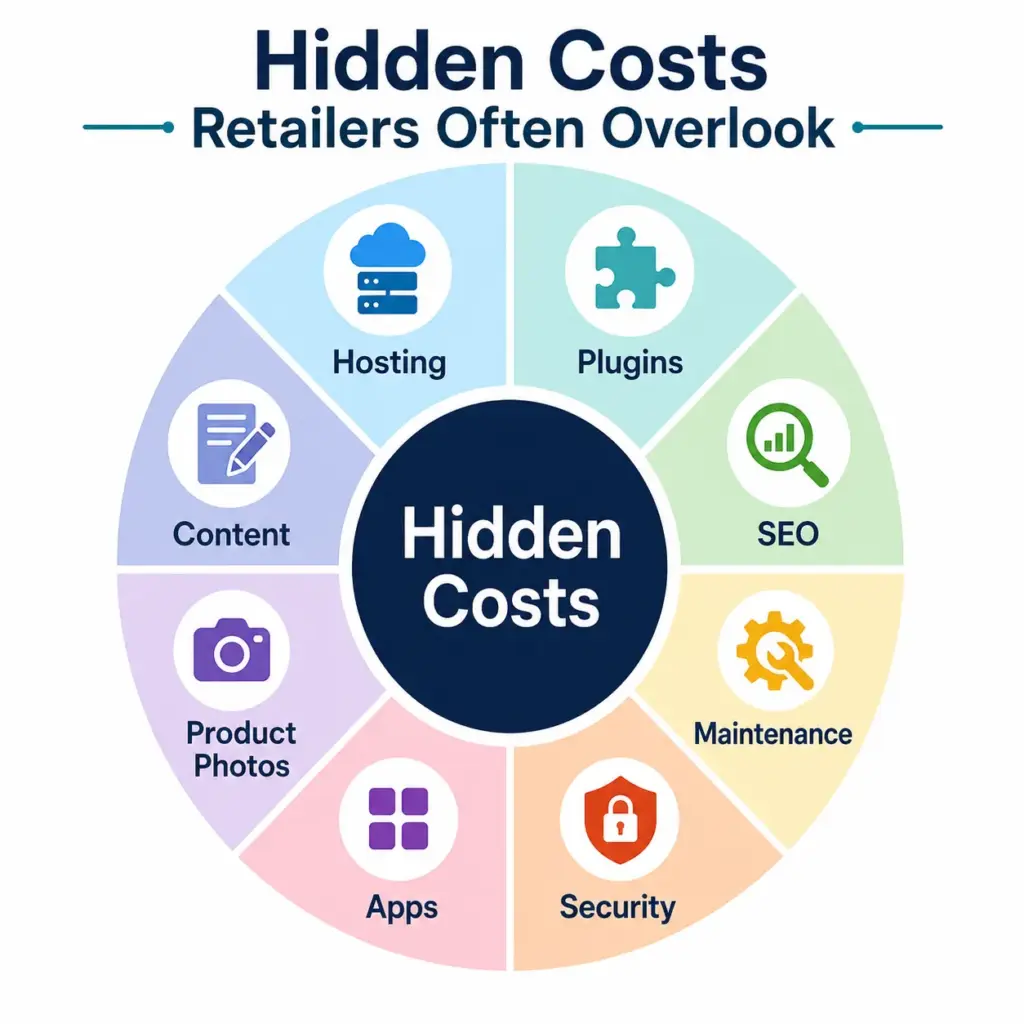
Many ecommerce budgets focus only on website design and development.
However, successful ecommerce businesses should also plan for several ongoing costs.
Common hidden expenses include:
- Premium apps and plugins
- Product photography
- Product description writing
- Content creation
- SEO improvements
- Website maintenance
- Security monitoring
- Software updates
- Performance optimization
- Email marketing
- Domain and hosting renewals
- Payment gateway transaction fees
Understanding these costs early helps retailers avoid unexpected expenses after launch.
The Cost of Choosing the Wrong Solution
Trying to save money during the initial development phase can sometimes lead to significantly higher costs later.
Retailers often encounter challenges such as:
- Website redesign within a few years
- Platform migration
- Poor mobile experience
- Slow website performance
- Limited scalability
- Difficult inventory management
- Integration issues
- SEO problems
These issues frequently cost far more than investing in the right solution from the beginning.
Before selecting a platform, many retailers find it helpful to compare Shopify vs WooCommerce for Retailers to understand how platform decisions affect both development costs and future operational expenses.
Cost vs Return on Investment
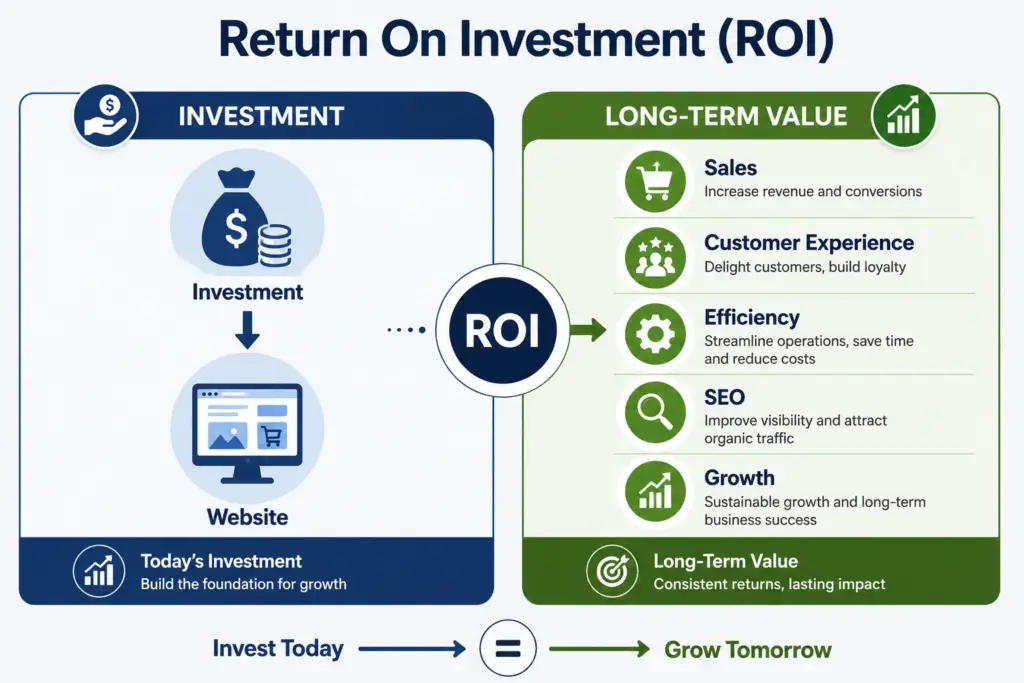
The objective of an ecommerce website should never be to build the cheapest website.
Instead, retailers should evaluate the return on their investment.
A professionally developed ecommerce website can contribute to:
- Increased online sales
- Better customer experience
- Higher conversion rates
- Improved inventory accuracy
- Reduced manual work
- Stronger search engine visibility
- Easier business expansion
- Better integration with retail operations
When viewed over several years, these benefits often outweigh the initial development investment.
Budgeting for Future Growth
Retailers should think beyond today’s requirements.
Questions worth considering include:
- Will the product catalog grow?
- Will additional retail locations be added?
- Will marketplace selling become important?
- Will a retail POS system be integrated later?
- Will customer loyalty programs be introduced?
- Will international selling become a future objective?
Planning for future growth during website development is often more cost-effective than redesigning the entire website later.
Cost Planning Checklist
Before requesting quotations, retailers should prepare the following information:
- Business objectives
- Number of products
- Preferred ecommerce platform
- Design preferences
- Required integrations
- Payment methods
- Shipping requirements
- Marketing goals
- Future POS requirements
- Expected business growth
Providing this information allows development partners to prepare more accurate project estimates.
In Short
The true ecommerce website development cost depends on business requirements rather than platform choice alone. Retailers should evaluate both the initial project investment and the long-term costs of maintaining, expanding, and integrating their ecommerce website.
Retail Matchmaker’s Perspective
Every retailer wants an ecommerce website that looks professional, but long-term success depends on much more than attractive design. Platform selection, website architecture, inventory management, customer experience, and future integrations all influence how effectively an online store supports business growth.
At Retail Matchmaker, we help retailers make informed technology decisions rather than simply recommending the most popular platform. Our Ecommerce Website Development services are designed specifically for independent retailers and multi-location businesses that want scalable, high-performing online stores built for long-term success.
Whether you’re launching your first ecommerce website or replacing an outdated online store, investing in the right solution from the beginning can reduce future redevelopment costs while improving operational efficiency.
If you’re still evaluating platforms before estimating your budget, we also recommend reading our Shopify vs WooCommerce for Retailers comparison to understand how platform selection influences both development costs and ongoing maintenance.
Key Takeaway
The lowest project quote does not always represent the best value.
Retailers should evaluate ecommerce website development cost based on the long-term benefits the website delivers, including scalability, inventory management, search engine visibility, customer experience, operational efficiency, and future POS integration.
A well-planned ecommerce website becomes a long-term business asset rather than simply another business expense.
Frequently Asked Questions
The cost depends on factors such as platform selection, website design, number of products, required integrations, custom functionality, and ongoing maintenance. Every retail business has unique requirements, so project costs vary accordingly.
Not necessarily. Shopify offers predictable monthly pricing, while WooCommerce may require additional investments in hosting, plugins, security, and maintenance. The total cost depends on your business requirements rather than the platform alone.
The primary cost drivers include platform selection, website design complexity, product catalog size, third-party integrations, custom functionality, SEO implementation, and future scalability requirements.
Choosing the lowest-cost option often leads to higher long-term expenses if the website cannot scale, integrate with business systems, or support future growth.
Planning for POS integration may increase the initial project scope slightly, but it often reduces redevelopment costs later by ensuring the website is prepared for future connectivity.
Retailers planning future integrations can learn more about our Lightspeed Shopify Integration services.
Yes. A professionally developed ecommerce website should support future expansion, including larger product catalogs, additional retail locations, new payment methods, and omnichannel selling.
Yes. Retailers should budget for software updates, security monitoring, performance optimization, backups, content updates, and periodic feature improvements after launch.
Shopify, WooCommerce, and Magento all provide excellent long-term value when selected according to the retailer’s operational requirements and growth strategy.
Project timelines vary depending on complexity, design requirements, integrations, product catalog size, and client approvals. Most professional ecommerce projects require careful planning before development begins.
Retail Matchmaker helps retailers select the right ecommerce platform, develop scalable online stores, optimize customer experience, and prepare for future POS integration and omnichannel growth.
Conclusion
Understanding ecommerce website development cost is about much more than comparing quotations.
The real investment lies in creating an ecommerce website that supports your business for years to come. Platform selection, customer experience, inventory management, integrations, SEO, and scalability all influence the long-term return on investment.
Rather than focusing solely on the lowest upfront cost, retailers should evaluate which solution best supports their current operations while preparing for future growth.
A professionally planned ecommerce website can improve operational efficiency, strengthen customer relationships, increase online sales, and reduce future redevelopment costs.
Ready to Build Your Ecommerce Website?
Whether you’re launching a new online store, redesigning an existing ecommerce website, or comparing Shopify, WooCommerce, and Magento, Retail Matchmaker can help.
Our team specializes in ecommerce website development for retailers across the USA and Canada, helping businesses build scalable websites that integrate seamlessly with future retail technology.
Contact Retail Matchmaker today for a free consultation and receive a customized ecommerce website development proposal based on your business goals and growth plans.

