
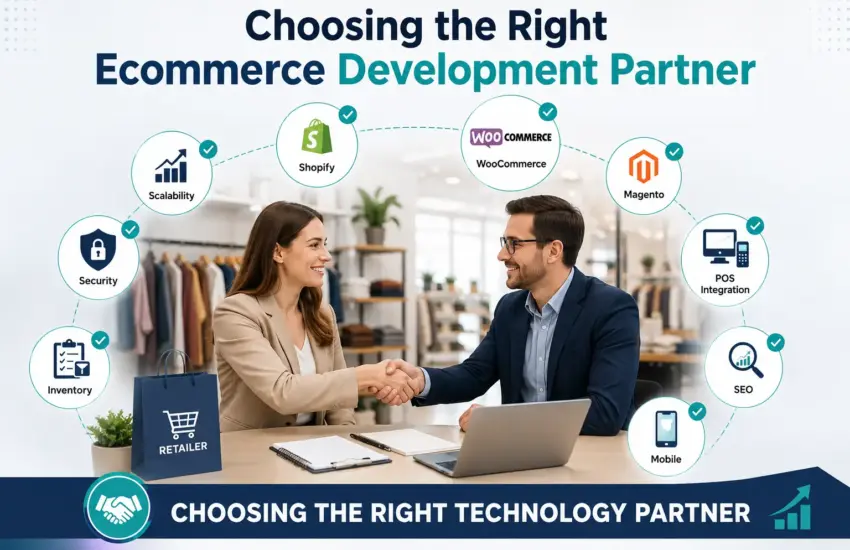
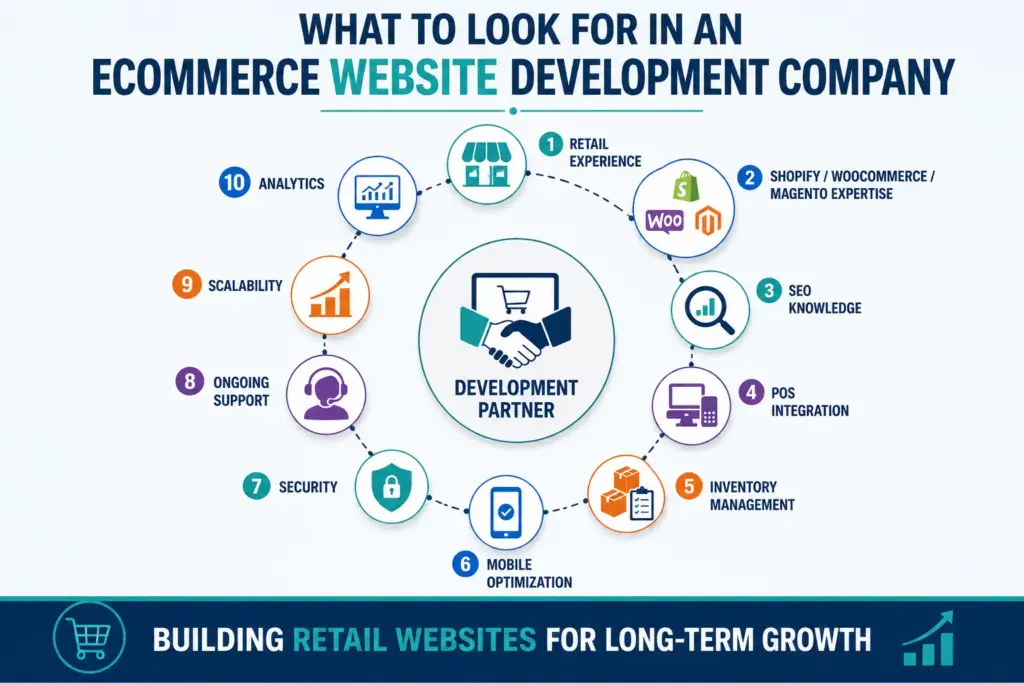
Selecting an ecommerce website development company is one of the most important technology decisions a retailer will make. The right partner can build an online store that supports business growth, customer experience, inventory management, and future integrations. The wrong choice can lead to costly redesigns, performance issues, and limited scalability.
An experienced ecommerce website development company does far more than build attractive websites. It understands retail operations, ecommerce platforms, search engine optimization, payment gateways, inventory synchronization, and omnichannel retail. The development process should focus on creating a long-term business solution rather than simply launching a website.
Many retailers compare companies based only on price, but the lowest quote rarely delivers the greatest long-term value. Experience with retail businesses, technical expertise, communication, post-launch support, and platform recommendations all contribute to the overall success of an ecommerce project.
If you’re still planning your online store, our guide on Why Retailers Need a Specialized Ecommerce Website explains why retail businesses require a different approach than generic business websites.
Why Choosing the Right Development Company Matters
An ecommerce website becomes the digital storefront of your business. It influences customer experience, operational efficiency, online visibility, and future growth.
Choosing the right ecommerce website development company helps retailers:
- Build a scalable online store
- Improve customer experience
- Increase search visibility
- Reduce redevelopment costs
- Prepare for future POS integrations
- Support omnichannel retail
- Improve inventory accuracy
- Enhance website security
- Increase online sales
A knowledgeable development partner considers both current requirements and future business goals before recommending technology solutions.
Questions to Ask an Ecommerce Website Development Company
Before selecting a development partner, retailers should ask several important questions.
Do They Have Retail Industry Experience?
Developing websites for retailers differs significantly from building websites for service businesses or corporate organizations.
Retail-focused developers understand:
- Inventory management
- Product catalog structure
- Product variants
- Customer purchasing behaviour
- Payment processing
- Shipping workflows
- Returns management
- POS integrations
Experience within the retail industry often leads to better recommendations and fewer implementation challenges.
Do They Work With the Right Ecommerce Platforms?
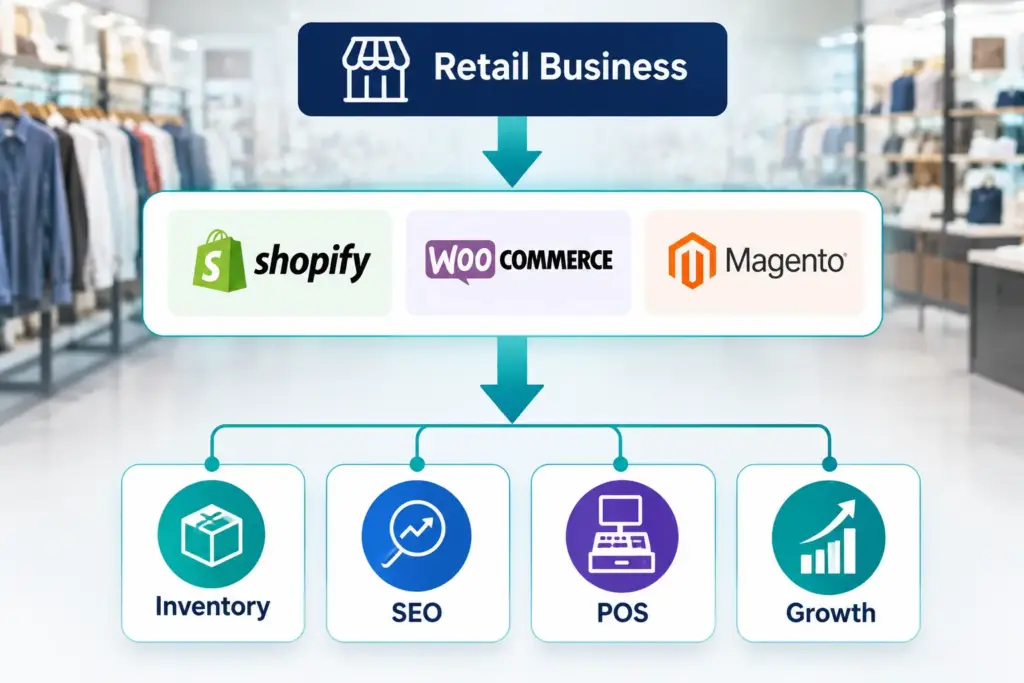
Every retailer has different operational requirements.
A professional ecommerce website development company should explain the advantages and limitations of each platform instead of recommending the same solution for every client.
Common ecommerce platforms include:
Shopify
Ideal for retailers seeking fast deployment, ease of management, excellent reliability, and a mature app ecosystem.
WooCommerce
Suitable for retailers wanting greater flexibility, WordPress integration, and complete control over customization.
Magento
Designed for larger retailers requiring advanced customization, enterprise functionality, and extensive product catalog management.
Retailers comparing platforms should also read our detailed comparison of Shopify vs WooCommerce for Retailers before making a decision.
In Short
Choosing an ecommerce website development company is about finding a long-term technology partner—not simply hiring someone to build a website. Industry experience, platform expertise, and an understanding of retail operations are essential factors that influence the long-term success of your ecommerce investment.
Can They Build an SEO-Friendly Ecommerce Website?
An ecommerce website should attract customers through search engines as well as paid marketing. A professional ecommerce website development company should understand technical SEO and incorporate it into the website architecture from the beginning.
Key SEO considerations include:
- Clean URL structure
- Mobile-responsive design
- Fast page loading
- Schema markup
- XML sitemap
- Optimized heading hierarchy
- Internal linking
- Image optimization
- Secure HTTPS implementation
SEO is significantly easier and more cost-effective when incorporated during development rather than added after launch.
Retailers interested in improving search visibility should also explore our guide to 15 Essential Retail Ecommerce Website Features, which explains why SEO-friendly architecture is a core requirement for every online store.
Google’s Search Essentials documentation explains many of the technical SEO best practices that should be incorporated during website development.
Do They Understand POS and Inventory Integration?
A website should not operate independently from the rest of your retail business.
An experienced ecommerce website development company understands how ecommerce websites connect with retail POS systems, inventory management software, accounting platforms, shipping providers, and payment gateways.
Common integration requirements include:
- Product synchronization
- Inventory synchronization
- Customer synchronization
- Order synchronization
- Pricing updates
- Sales reporting
- Shipping automation
Retailers planning omnichannel operations should ensure their development partner has practical experience with future integrations rather than treating them as an afterthought.
If your business uses Lightspeed Retail POS, our Lightspeed Shopify Integration solutions demonstrate how seamless synchronization can reduce manual work while improving inventory accuracy.
Evaluate Their Portfolio Carefully
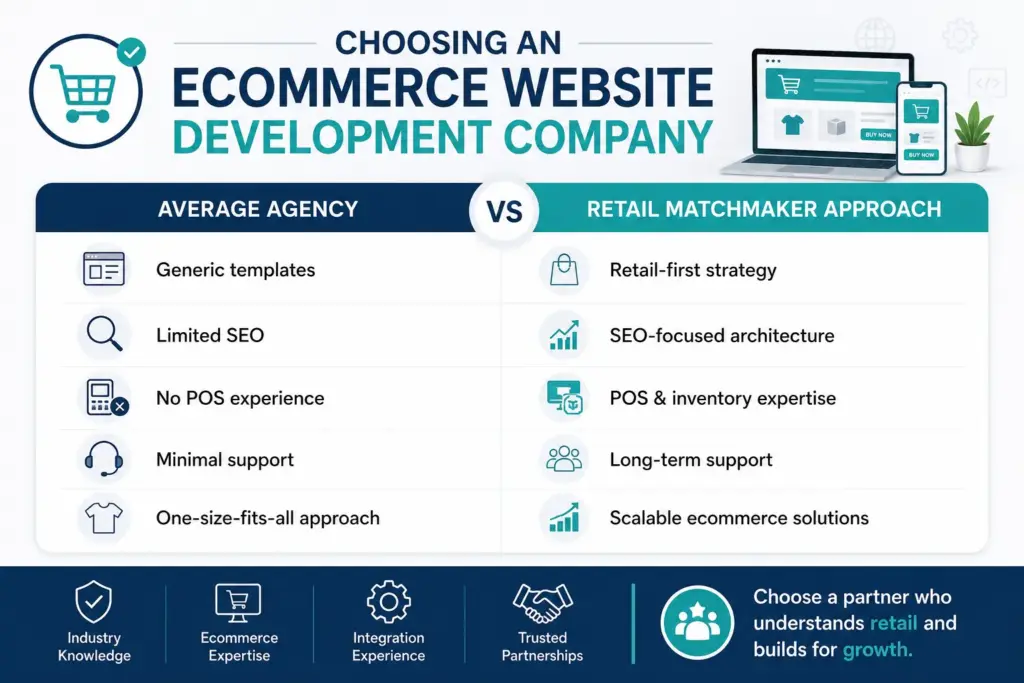
A portfolio should demonstrate more than attractive website designs.
When reviewing previous projects, ask:
- Have they built websites for retailers?
- Do product pages load quickly?
- Is navigation intuitive?
- Is the checkout process simple?
- Does the website perform well on mobile devices?
- Are category pages well organized?
- Is the search functionality effective?
- Does the design support future growth?
A portfolio should provide evidence that the company understands retail operations, customer experience, and ecommerce best practices.
Ask About Ongoing Support
Launching an ecommerce website is only the beginning.
Retailers should understand what support is available after launch, including:
- Security updates
- Platform updates
- Bug fixes
- Performance optimization
- Backup management
- Technical support
- Feature enhancements
- Ongoing SEO improvements
A reliable ecommerce website development company continues supporting retailers as their business evolves rather than ending the relationship after launch.
Red Flags to Watch For
Not every development company specializes in ecommerce or retail.
Warning signs include:
- No retail experience
- Unrealistically low pricing
- No clear development process
- Poor communication
- No maintenance services
- No discussion of SEO
- Limited integration knowledge
- No scalability planning
- No references or portfolio
Choosing the wrong partner can lead to redevelopment costs that far exceed the initial savings.
Retailers comparing project budgets should also read our article on Ecommerce Website Development Cost to better understand the factors that influence pricing and long-term value.
Quick Evaluation Checklist
| Question | Why It Matters |
|---|---|
| Retail industry experience | Better understanding of retail operations |
| Platform expertise | Appropriate technology recommendations |
| SEO knowledge | Higher long-term search visibility |
| POS integration experience | Supports omnichannel growth |
| Portfolio quality | Demonstrates practical capability |
| Post-launch support | Long-term reliability |
| Scalability planning | Reduces future redevelopment costs |
In Short
The best ecommerce website development company is one that understands your business—not just your website. Experience in retail, technical expertise, SEO knowledge, integration capabilities, and long-term support are all essential when choosing a development partner.
Retail Matchmaker’s Perspective
Choosing an ecommerce website development company is about more than launching a website—it’s about selecting a technology partner that understands how retail businesses operate.
At Retail Matchmaker, we specialize in ecommerce website development for retailers across the USA and Canada. Our approach combines modern website design with practical retail experience, ensuring your online store supports inventory management, customer experience, SEO, future POS integrations, and long-term scalability.
Rather than recommending the same platform for every client, we evaluate your products, business processes, growth plans, and operational requirements before suggesting the most suitable ecommerce solution. Whether you’re considering Shopify, WooCommerce, Magento, or a custom ecommerce platform, our goal is to build a website that continues supporting your business as it grows.
Key Takeaway
Selecting the right ecommerce website development company can have a lasting impact on your business. Beyond attractive design, retailers should evaluate industry experience, platform expertise, SEO knowledge, integration capabilities, post-launch support, and scalability planning.
By investing in the right development partner from the beginning, retailers can reduce future redevelopment costs, improve operational efficiency, and build a stronger foundation for long-term ecommerce success.
Frequently Asked Questions
An ecommerce website development company designs, develops, and supports online stores while helping businesses choose the right platform, implement integrations, optimize SEO, and improve customer experience.
Look for retail industry experience, ecommerce platform expertise, SEO knowledge, POS integration capabilities, transparent communication, and long-term support services.
The best platform depends on your business size, budget, customization requirements, and future growth plans. An experienced development partner should recommend the platform that best fits your business rather than promoting a single solution.
Retail businesses have unique requirements such as inventory management, product variants, payment processing, shipping workflows, and omnichannel operations that differ from other industries.
SEO should be incorporated during development to ensure the website has clean architecture, fast performance, structured data, and search-engine-friendly navigation.
Yes. Many ecommerce platforms can integrate with retail POS systems, enabling inventory synchronization, order management, and customer data synchronization.
A reliable ecommerce website development company should provide ongoing support, software updates, security monitoring, performance improvements, backups, and technical assistance.
Project timelines depend on platform selection, design complexity, integrations, product catalog size, and custom functionality. Smaller projects may take a few weeks, while larger implementations require more time.
Not necessarily. The lowest initial cost may result in higher long-term expenses if the website requires significant redevelopment, lacks scalability, or omits essential functionality.
Retail Matchmaker focuses on ecommerce website development specifically for retailers, combining retail industry knowledge with SEO, integration expertise, and scalable technology solutions designed for long-term business growth.
Conclusion
Selecting an ecommerce website development company is one of the most important technology decisions a retailer will make.
The right partner should understand retail operations, recommend the appropriate ecommerce platform, incorporate SEO from the beginning, support future integrations, and provide ongoing assistance as your business grows.
Rather than choosing a development company based solely on price, retailers should focus on long-term value, technical expertise, communication, and proven experience with ecommerce projects.
A well-planned ecommerce website becomes more than an online storefront—it becomes a critical part of your retail business strategy.
Ready to Build Your Retail Ecommerce Website?
Whether you’re launching your first online store or replacing an outdated ecommerce website, Retail Matchmaker can help you build a scalable solution designed specifically for retailers.
Our team specializes in ecommerce website development, retail technology consulting, SEO-friendly website architecture, and future-ready POS integration strategies that support long-term business growth.
Contact Retail Matchmaker today for a free consultation and discover how the right ecommerce website can help your retail business succeed.

